


074 – The Art of Coming Ashore

Before you drop anchor and dive into this entry, I've buried two words from my daily calendar somewhere in the text below. They are Aplomb and Ultracrepidarian. Think of it as a treasure hunt on the high seas of the written word.
Portsmouth did not roll out a welcome mat. It rolled out a man with opinions. We had chosen a "Free" marina, the one Mile Zero Marine recommended as it was only 200 metres from their shop and their technicians could inspect our broken Victron Inverter. The place had all the charm of a city centre bus station at midnight. The water sat shallow. The pontoons squatted low. A handful of ragtag locals occupied the park benches nearby, watching us with the unhurried curiosity of people who had seen boats come and go and had long since stopped caring.
I spotted a long wall. Solid. Inviting. I pointed Sawasdeekat towards it, imagining a simple mooring and a cold drink. Pookie lifted the first rope.
"That's for the Ferry!"
The shout came from a man on a nearby boat, his voice carrying the righteous fury of someone who had appointed himself guardian of the waterfront. I glanced across the marina. A ferry terminal stood on the opposite side, complete with signs and a ticket booth and every trapping of officialdom. His warning hinted of nonsense. But the last thing we needed was a confrontation with an ultracrepidarian of the highest order, doling out nautical wisdom with the confidence of a man who had never actually untied a line. We heeded him anyway.
After a series of manoeuvres that resembled a broken shopping trolley, we wedged Sawasdeekat against a row of upright poles facing the road. We jumped ashore at half nine and walked the two hundred metres to Mile Zero Marine. The woman inside greeted us with a smile and a helpless shrug. Unable to help we had to wait until our contact had finished his call. We waited.
Ten o'clock arrived. Our contact finished and informed us, with the casual indifference of a man discussing the weather, that he had just committed to visiting another boat and would probably not be able to look at ours today. We had booked this appointment weeks ago. We had no power and were staying in a Free marina he suggested that had a limit of 72hours. We had sailed 1880 miles and 6 weeks with no electricity to see a Victron specialist AND had called in advance but now we would have to wait.
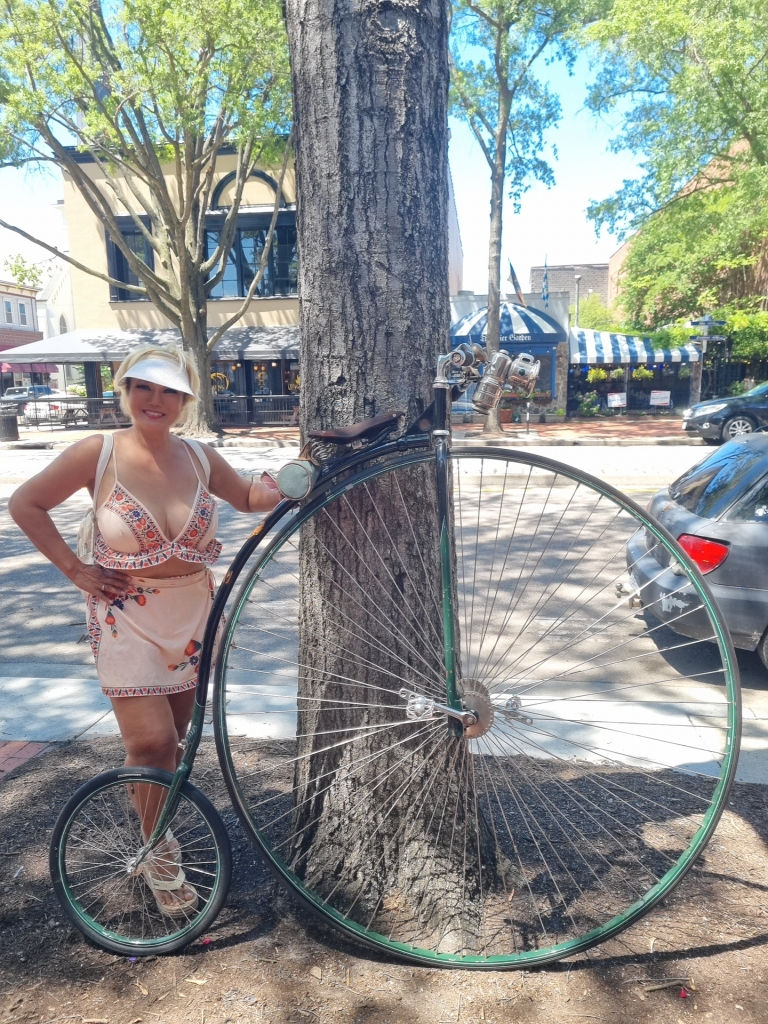
We walked away and continued up High Street slightly disgruntled.
Thai Basil appeared like a mirage. Pookie's face transformed. Home food. The closest thing to Bangkok this side of the Atlantic. We sat, we ate, and for a while the frustration dissolved. By the time we ambled back, the tide had risen. The pontoon now sat almost level with the water. We clambered aboard with wet feet and a decision: this place would not do. The tide would rise further and our lines, placed over ever shortening wooden poles, would no longer guarantee our adherence to the dock.
Hospital Point became our refuge. A mooring outside the Naval Medical Centre, a name that inspired about as much confidence as a dentist called Doctor Payne. The strategic peninsula earned its name long before our arrival. It hosted a fort during the Revolutionary War and the War of 1812, and later a Confederate battery during the Civil War. The Navy built their first hospital here between 1827 and 1833, and that Greek Revival building still stands today, watching over the Elizabeth River with the weary patience of an old sentinel.
We had arrived on a Friday. Mile Zero Marine did not work weekends. This left us with whatever charge remained in our house bank, a dwindling resource that Pookie monitored with the anxiety of a chef watching her food processor grind to a halt. By Monday we had become almost regulars at the “Fish & Slips Marina Raw Bar and Grill”, where the food and the entertainment earned their keep. We had also taken the dinghy back to Free Marina and paid two dollars for the ferry across the Elizabeth River to Norfolk. Norfolk has a modern city centre with high rise and mainly bland buildings. It was preparing for a cruise ship arrival and the marina buzzed with expectation. These floating cities bring money and chaos in equal measure, and Norfolk seemed happy to welcome both.
Monday brought two arrivals: the cruise ship and three men from Mile Zero Marine.
Around mid morning they jumped from their dinghy, ran their checks, and within an hour declared the inverter needed removal and bench testing. They lifted it out and vanished. By now it was midday. With only 12v power we decided not to waste the afternoon. We pointed Sawasdeekat north and back up the Elizabeth River, our one engine growling, and limped towards Fort Monroe.
Just north of the long row of naval war ships Fort Monroe stands at Old Point Comfort, the southern tip of the Virginia Peninsula, guarding the channel between the Chesapeake Bay and Hampton Roads. It was designed to defend these waters from foreign adversaries, built by a workforce that included enslaved labourers, and it witnessed history that would shape a nation. We anchored nearby, exhausted, and took the dinghy ashore to a marina that had seen better days. The Old Point Comfort Marina had pontoons underwater, decks in disrepair and wore its decay with a strange dignity.
The “Deadrise” restaurant fed us. A quaint fish and seafood restaurant whose character and cooking had kept it alive despite the graveyard outside. We ate, we slept, and the next morning we lifted anchor once again.
The next day the wind fought us. We motored on our one remaining engine and made a pitiful three point five knots. The boat crawled around the shallow flats outside Buckroe and Grandview beaches, battered by wind and water. Only when we turned into Mobjack Bay did the sea release its grip. Mobjack. The name itself carries mystery. Some say it comes from an Algonquin word meaning "worthless earth," which feels unfair for a place of such quiet beauty. Others trace it to a will from 1657 that mentions "Mockjack Bay." The truth remains buried, like so much of this coastline's history.
We threaded our way up the East River where Zimmerman Marine waited, a small boatyard in Cardinal, population eighty-four, a place that defines the phrase "in the country."

The next morning John met us at the entrance. The water ran shallow and Sawasdeekat kissed the muddy bottom as I negotiated the channel. Pookie, who was delighted to be on terra-firma offered a small "well done" when we finally slid into the marina.
We had never lifted Sawasdeekat out of the water using a trailer before; usually, it was the dramatic, swift work of a large crane. This time, our fate rested on a small, weathered blue shunt wagon named Sisyphus, which reversed down the ramp and plunged into the shallows. I had first heard about Sisyphus when Pookie was on Masterchef. One of the finals contestants had mentioned him in a cheery explanation of self.
As the trailer caught and lifted our catamaran, the little machine began its agonizing climb. Sisyphus growled and grunted, straining against the incline, a mechanical reflection of its Greek mythical namesake, forever condemned to push an impossible weight up a hill. In that moment, our boat was a massive, floating rock being hauled from the deep onto dry land. For the wagon, it was just one more repetitive cycle in a lifetime of dragging countless boats out of the water, only to return to the bottom of the slope and begin again. We walked alongside, relieved to finally escape the water and reach the comfort of shore power, leaving Sisyphus to its eternal, heavy task.
Our desire for power was thwarted two ways. First they parked us near some trees, forty-five feet from the nearest outlet and too far for our cable. Second, the DC to DC charging system installed by Tradewind Marine in St Maarten should have handled the conversion from European 240 volts to American 120, but it did not have an inverter to manage it.
Our original 240v cable would be too thin for the current even if we had an inverter and so we would have to order another. An electrician tried to force 240 volts through a bar so we cold connect directly and avoid the inverter altogether, but all he did was blow every fuse in the yard. In the end, Guy, a kind soul from a boat near ours, rigged a temporary supply. With one working socket we persevered. We adapted and we handled the whole saga with a surprising amount of aplomb, all things considered.
My original plan had been simple. Sail north to the American and Canadian lakes. Winter there. Sail south the following year. Cross the Panama Canal like our friends Steve and Sue. Sail up the west coast to Alaska. Return to Panama. Cross the Pacific to Australia.
Simple.
Except since then my now 3 year old plan had changed. Firstly for the weather. Sailing this route would take years. Three years minimum, we calculated, if we wanted to actually see where we were going. The plan collapsed under the weight of its own ambition.
And so we had adapted and made a new one. A simpler one.
Leave Sawasdeekat at Zimmerman Marine for eighteen months. Arrange the repairs. Buy or rent an RV and explore America, Canada, Mexico by land. The sea would wait. It was a simple and brilliant way to see this part of the world in less time – or was it.
Join us next time as we settle into Cardinal, meet the locals, and discover that our plans are about to change completely - Again.


Comments